

BeamNG Drive Browser
Vehicle damage in BeamNG Drive Browser develops through physical simulation rather than a collection of predetermined crash animations. Each car is represented by interconnected structural elements that respond to collisions, pressure, movement, and changes in weight distribution. When a vehicle strikes an obstacle, its body can deform according to the direction and intensity of the impact. Mechanical components may also become damaged, affecting steering, acceleration, braking, and suspension behavior. The game concentrates on driving experimentation, vehicle physics, and independent challenges instead of a conventional storyline with named protagonists.



Similiar games
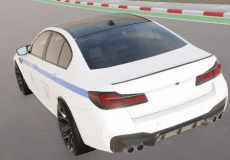
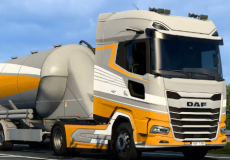




Vehicle damage in BeamNG Drive Browser develops through physical simulation rather than a collection of predetermined crash animations. Each car is represented by interconnected structural elements that respond to collisions, pressure, movement, and changes in weight distribution. When a vehicle strikes an obstacle, its body can deform according to the direction and intensity of the impact. Mechanical components may also become damaged, affecting steering, acceleration, braking, and suspension behavior. The game concentrates on driving experimentation, vehicle physics, and independent challenges instead of a conventional storyline with named protagonists.
Soft-Body Physics and Mechanical Damage
The simulation uses a network of nodes and beams to represent vehicle structures. Different components respond to forces according to their physical properties. A collision can bend body panels, damage wheels, alter suspension geometry, or interrupt engine operation. Even when a vehicle remains capable of moving, its handling may change considerably following an impact. Players can examine these developments by repeating the same driving situation with different speeds, vehicle configurations, or directions of contact.
Vehicles, Maps and Driving Experiments
BeamNG Drive Browser allows players to explore environments containing highways, urban streets, rural roads, mountainous terrain, and dedicated testing facilities. Vehicles range from compact passenger cars to trucks, buses, sports cars, and industrial transportation.
The main gameplay activities include:
· Testing vehicle damage during collisions.
· Driving across uneven off-road terrain.
· Participating in time trials.
· Completing delivery and transportation scenarios.
· Experimenting with suspension configurations.
· Testing engine and transmission modifications.
· Creating traffic situations with AI-controlled vehicles.
· Using ramps and obstacles for stunt experiments.
Different cars possess individual weight distributions, engine characteristics, drivetrain arrangements, and suspension systems. Players can modify compatible components to examine their effects on acceleration and handling. Tire selection, gearing, and differential settings can also influence vehicle behavior. The environment provides opportunities to observe how the same car responds differently to paved roads, gravel, mud, and steep gradients.
Scenarios and Sandbox Progression
Freeroam provides unrestricted access to selected maps and vehicles, while scenarios introduce specific objectives involving racing, transportation, pursuit, or obstacle navigation. The original game also includes an experimental Career Mode focused on vehicle ownership and structured activities. There is no requirement to follow a single progression route through every available environment. Players can reset damaged cars, change vehicle configurations, and repeat experiments whenever necessary. BeamNG Drive Browser emphasizes learning through physical interactions, with replayability developing from the numerous possible combinations of vehicles, terrain, and driving conditions.
Discuss BeamNG Drive Browser
